Boosting Cognitive Skills with Strategy Games: The Intersection of Mental Performance and Decision Making
The Power of Strategic Play in Cognitive Development
In today’s fast-paced world, the ability to think critically and make swift, effective decisions has never been more crucial. Strategy games have emerged as powerful tools in enhancing cognitive skills, providing a fun and engaging medium for mental training. These games boost not only intelligence but also offer diverse benefits that extend well beyond mere entertainment.
Consider some of these advantages:
- Improved Problem-Solving: Players learn to navigate complex scenarios, fostering analytical thinking. For instance, games like chess require players to anticipate their opponent’s moves, increasing their capacity to solve intricate problems and think several steps ahead.
- Enhanced Memory: Many strategy games necessitate that players remember rules, sequences, and outcomes. In card games like poker, for example, players must recall their cards as well as deduce what others might be holding to make informed decisions.
- Effective Decision Making: Quick, strategic choices are essential to prevail against opponents. Games such as *Ludo* or *Monopoly* often present players with unexpected challenges that require them to pivot and make decisions under pressure, sharpening their decision-making skills in real time.
Across Nigeria, traditional games like *damii* and *oko* emphasize strategic thinking and social interaction. These games often form community bonds and serve as a platform for elders to pass down wisdom and tactics to younger generations. Playing *oko*, for instance, fosters not only cognitive skills but also teaches players the importance of patience, strategy, and teamwork.
The intersection of mental performance and decision-making within these games paves the way for improved daily functioning. Engaging consistently with strategy games not only entertains but also molds the brain for real-life challenges such as career-related decisions, academic pursuits, and interpersonal relationships. Research studies suggest that individuals who engage in strategic play typically exhibit higher levels of creativity and flexibility in their thinking, qualities that are immensely valuable in any profession.
As we explore this intriguing relationship, you’ll uncover how strategy games can serve as a foundation for cognitive development. They challenge players to think critically and adaptively, thereby shaping a brighter future for individuals engaged in them. Whether it’s in urban hubs buzzing with technology or rural areas steeped in tradition, the mental exercises provided by these games equip players with essential skills for navigating the complexities of modern life.
With the rise of digital platforms, there has never been a better time to dive into the world of strategy games, opening doors to both recreational enjoyment and cognitive enhancement. So gather your friends or challenge your family members to a game, and uncover the wealth of knowledge and skill-building waiting to be explored.
RECOMMENDED: Check out this similar article
Unlocking Brain Potential through Strategic Engagement
As we delve deeper into the realm of strategy games, it becomes evident why these activities are highly regarded for enhancing cognitive skills. They engage the brain in multifaceted ways, shaping our mental faculties to adapt to challenges across various domains of life. One of the primary benefits of strategy games is their ability to elevate critical thinking, which is essential not only for personal growth but also for professional success. Players are constantly confronted with emerging scenarios that require evaluation, analysis, and tactical planning, turning cognitive exercise into an enjoyable experience.
Here are several key cognitive benefits derived from engaging with strategy games:
- Strategic Planning: Games such as *Chess* and *Checkers* demand extensive foresight and planning. Players must develop long-term strategies while remaining adaptable. This ability to strategize can translate to improved performance in real-world situations, such as effective project management at work.
- Cognitive Flexibility: Strategy games promote the enhancement of cognitive flexibility—the capacity to switch between tasks and thoughts. This is particularly useful in environments where quick adaptability is key, such as during high-pressure job situations or when navigating the complexities of modern relationships.
- Collaboration and Teamwork: Many strategy games, including team-based board games or mobile multiplayer games, require players to work together to achieve a common goal. This collaborative aspect enhances interpersonal skills and teaches individuals how to communicate effectively while promoting teamwork and unity.
Moreover, the rise of digital strategy games has made these cognitive benefits more accessible than ever. Platforms like *League of Legends* and *Clash of Clans* provide an opportunity for players to engage in strategic gameplay with friends and enjoyed across Nigerian communities. While these titles are popular worldwide, they resonate deeply within the Nigerian market where vibrant gaming communities flourish, creating connections between generations and beyond borders.
The intertwining of mental performance and decision-making within these games instills players with a sense of confidence and improved self-efficacy. Enhanced abilities in assessing situations and arriving at informed conclusions can greatly impact personal and professional decisions. Individuals who engage in regular strategic play often exhibit greater resilience and better judgment, traits highly desirable in any context, from small business initiatives to academic endeavors.
As research continues to unfold, various studies have indicated a direct correlation between exposure to strategy games and cognitive development. Institutions exploring this connection emphasize the role of play in fostering creativity and analytical skills—qualities increasingly valued in the 21st-century workforce. For instance, gamifying learning has already found its place in many educational sectors, reinforcing the notion that strategy games are not merely pastimes but vital tools in developing sharp, agile minds.
In summary, the compelling intersection of strategy games, cognitive skill enhancement, and decision-making illustrates their significance as a powerful learning resource. Engaging with these games cultivates a conducive environment for mental growth while making the process enjoyable and rewarding. By investing time in strategic play, individuals are not only boosting their cognitive capabilities but also equipping themselves with essential skills needed in an increasingly complex world.
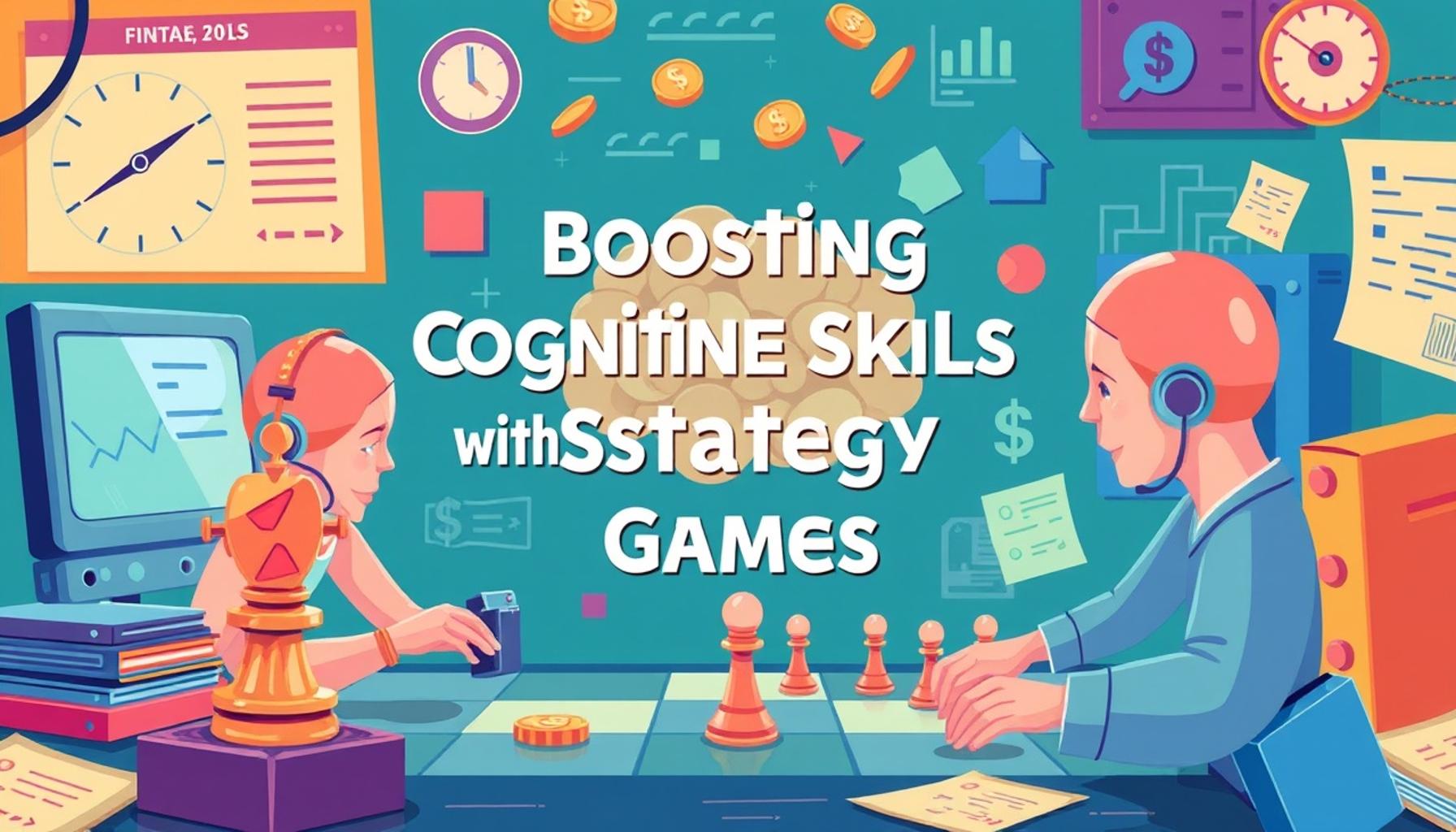
Boosting Cognitive Skills with Strategy Games
Strategy games have been lauded not only for their entertainment value but also for their potential to enhance cognitive skills. These games challenge players with complex scenarios that require critical thinking, problem-solving abilities, and the capacity for strategic planning. What many might not realize is how these gaming experiences can intersect with mental performance and decision-making in real life. As players navigate through various challenges, they develop a range of cognitive functions, including memory retention and social skills through interactive gameplay.
| Cognitive Skills Enhanced | Strategic Insights |
|---|---|
| Analytical Thinking | Players learn to evaluate situations critically, leading to improved decision-making. |
| Adaptability | Participants develop the ability to adjust strategies based on changing game dynamics. |
| Memory and Recall | Games often require players to remember past moves or decisions, strengthening their memory. |
| Collaboration & Social Skills | Multiplayer aspects enhance teamwork and communication abilities, vital for personal and professional success. |
Engaging with strategy games not only sharpens these skills but also provides insights into behavioral patterns and decision-making processes. This connection can be particularly beneficial in competitive environments, where decisions must be made swiftly and with confidence. Furthermore, the strategies learned from these games can translate to everyday life, teaching valuable lessons about risk assessment and foresight.
As we delve deeper into this rapidly evolving field of cognitive development, the evidence mounts that strategy games are not merely recreational. Instead, they serve as powerful tools that can unlock greater potential in our mental performance and decision-making capabilities. When combined with dedicated practice and reflection, the benefits can be profound and lasting.
CHECK OUT: Click here to explore more
Cognitive Skill Development through Cultural Context
An intriguing aspect of strategy games is how they uniquely reflect cultural contexts. In Nigeria, for instance, traditional games such as *Damii* and *Ludu* not only serve as entertainment but also reinforce vital cognitive processes like critical thinking, strategy formulation, and decision-making. These culturally rich games require players to think several steps ahead, mirroring the thought processes engaged in more contemporary, globally recognized strategy games.
The incorporation of culture into gaming underscores the importance of familiarizing the younger generation with their heritage while simultaneously enhancing cognitive skills. A study conducted by researchers at the University of Lagos highlighted that children who engage in traditional strategy games exhibit improved attention spans and problem-solving capabilities, skills that are crucial as they progress in their education. The findings suggest a link between cultural engagement through strategy games and heightened mental performance, indicating that these activities might prove pivotal in nurturing cognitive growth among the youth.
Here are additional cognitive benefits derived from traditional and modern strategy games:
- Enhanced Memory: Memory retention plays a crucial role in strategy games. Players must remember past moves, adapt their style to opponents, and anticipate future actions. This requirement leads to improved memory skills that can positively affect academic performance and daily life.
- Emotional Regulation: The nature of strategy games often introduces challenges that require players to manage their emotions effectively. The ability to maintain composure under pressure—be it emotional responses to winning or losing—translates well into real-world situations, such as handling stress in workplace environments.
- Resource Management: Many strategy games involve managing limited resources, whether it’s in terms of finances, time, or manpower. For players, the necessity to allocate resources efficiently cultivates a sense of accountability and organizational skills that can be applied in various areas of life, from managing household budgets to leading projects.
The impact of strategy games on cognitive skills can further be seen in educational settings, where teachers are increasingly incorporating game-based learning to foster higher engagement among students. For example, in some Nigerian schools, educators are using strategy games as tools to teach mathematical concepts and logical reasoning, effectively making learning more interactive and enjoyable. This innovative approach not only boosts students’ cognitive skills but also prepares them for a world that increasingly values analytical thinking and decision-making.
In addition, the rise of online platforms and mobile applications has democratized access to strategy games, allowing a diverse audience to partake regardless of geography. The increased accessibility has birthed vibrant gaming communities that engage in strategic discussions, share tactics, and even form new friendships transcending regional boundaries. Such interactions enrich players’ experiences and broaden their perspectives, fostering a sense of collaboration and collective growth. Notably, these communities also nurture leadership skills as members often take on roles that require considerable decision-making and directive responsibilities.
As we explore the extensive landscape of both traditional and modern strategy games, it becomes clear that their role in enhancing cognitive skills cannot be overlooked. They not only serve as recreational outlets but also as crucial instruments for personal and professional development, especially vital in Nigeria’s thriving youth culture. Engaging with these games equips players with enduring skills, applicable across various sectors, and ensures that players are not just participants but also strategic thinkers in an ever-evolving world.
SEE ALSO: Click here to read another article
Conclusion: The Lasting Impact of Strategy Games on Cognitive Skills
In conclusion, the profound relationship between strategy games and cognitive skill enhancement is becoming increasingly evident. As discussed, both traditional and modern strategy games serve as dynamic tools that hone critical thinking, decision-making, and emotional regulation skills. These games, steeped in cultural significance, not only provide entertainment but also instill vital life skills that are essential in today’s fast-paced world.
With the growing inclusion of strategy games in educational settings, educators are uncovering innovative avenues to boost engagement and improve learning outcomes. Nigerian schools are leading the way in this transformative approach, showcasing that game-based learning not only nurtures cognitive capabilities but also makes complex subjects more accessible and enjoyable for students.
Furthermore, the advent of online platforms has democratized access to these invaluable resources, enabling players from diverse backgrounds to form connected communities. Here, they can exchange strategies, enhance their decision-making processes, and build familiar networks—all enriching their cognitive experiences.
As Nigeria’s youth actively engage with these games, they are not merely falling into a trend; they are embracing tools that foster analytical thinking and creativity, paving the way for future leaders and innovators. Consequently, understanding the impact of strategy games extends beyond casual play; it prompts deeper reflection on how we can utilize these interactive platforms to foster a generation equipped to tackle the challenges of an ever-evolving landscape.
Ultimately, the intersection of mental performance and strategic thinking through games is a field ripe for further exploration. As researchers continue to delve into the cognitive benefits these games offer, it becomes increasingly clear that they are essential for personal growth, educational advancement, and societal development.

Beatriz
Beatriz Johnson is a seasoned puzzle enthusiast and writer with a passion for unraveling the complexities of mind games and brain teasers. With over a decade of experience in the world of puzzles, she specializes in topics like logic games, riddles, and strategic challenges. Through her work, Beatriz empowers readers to sharpen their problem-solving skills, think creatively, and stay engaged in the ever-evolving landscape of mind games and puzzles.