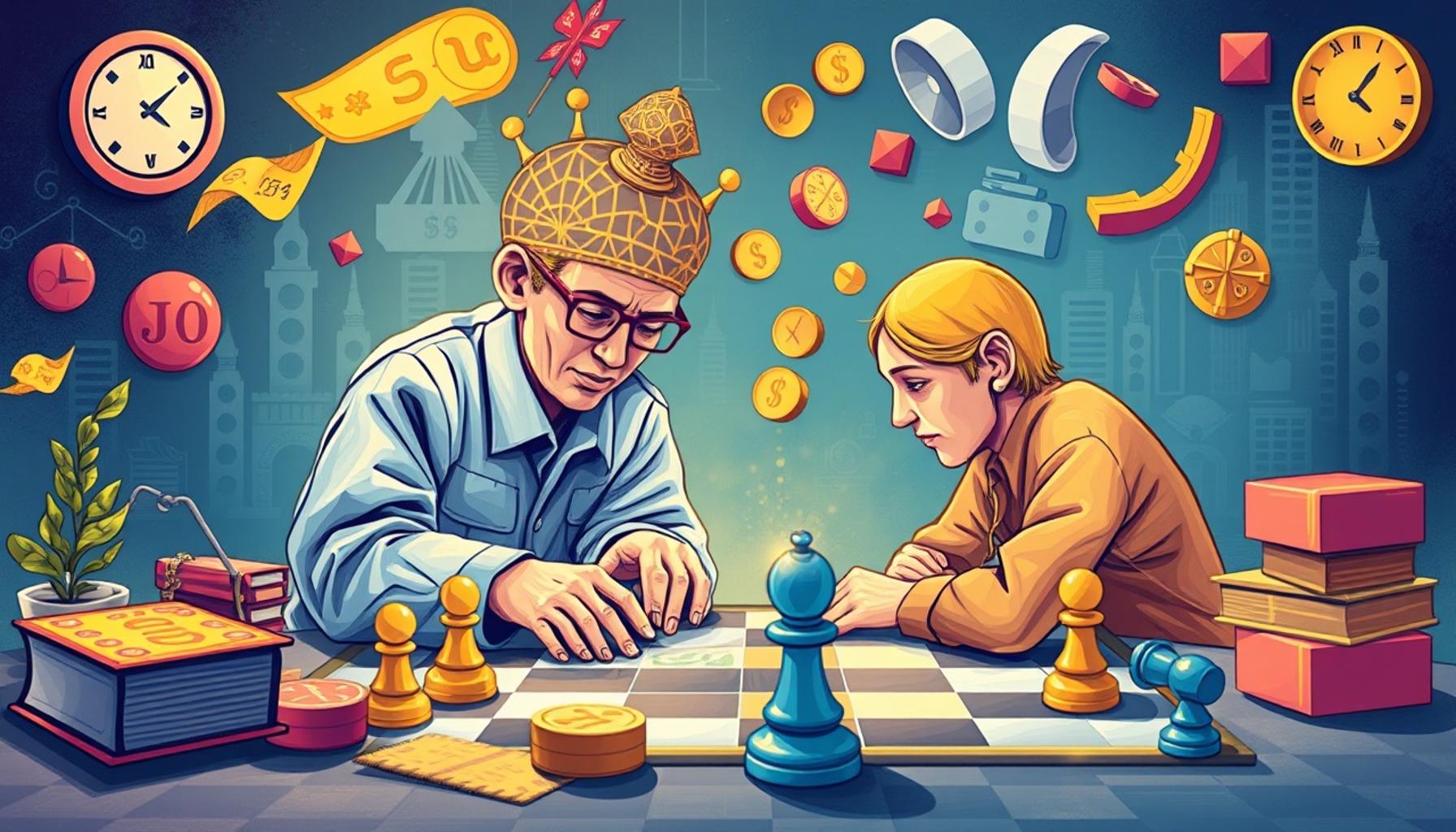
Innovative Strategies for Decision Making: Learning from Board Games and Puzzles

The Power of Play in Decision-Making
In today’s fast-paced and multifaceted world, honing effective decision-making skills has emerged as a critical necessity for success across various sectors. As traditional methods may sometimes fall short, innovative strategies from unexpected realms, such as board games and puzzles, have begun to surface as powerful instruments for enhancing these skills. These engaging activities, often associated with leisure and enjoyment, provide structured environments where decision-making can be practiced and refined.
One of the key components that board games and puzzles introduce is strategic thinking. Take chess, for instance; this timeless game requires players to anticipate their opponent’s moves, highlighting the importance of foresight and meticulous planning. Similarly, in games like Settlers of Catan, players must make calculated resource allocations and trade decisions to build their settlements while outmaneuvering their rivals. This type of strategic gameplay cultivates a mindset that is essential in real-life scenarios, where careful deliberation often leads to better outcomes.
Puzzles are another excellent methodology for enhancing problem-solving abilities. They compel players to think critically and devise solutions under time constraints. A classic example is the Rubik’s Cube, which challenges individuals to navigate through a myriad of combinations to arrive at a solution. This pushing against the clock can be illustrative of real-life situations, reinforcing the concept that quick and effective responses are often needed when pressing challenges arise. In Nigeria’s bustling markets or corporate boards, the ability to solve problems creatively can set individuals apart.
Furthermore, many games emphasize the value of collaboration, illustrating the importance of teamwork. Group games like Mafia or team-based strategy games often necessitate communication and shared goals to achieve victory. In Nigerian culture, where communal decision-making is a long-standing tradition, the collaborative nature of these games resonates powerfully. They serve as microcosms for larger societal structures, fostering a sense of community while enhancing the skill of working collectively toward mutual objectives.
For both professionals and casual players, engaging in these types of games can significantly bolster the decision-making process. The lessons gleaned from recreational activities can lead to profound insights in personal and professional realms. They offer a low-risk environment where participants can experiment with different strategies, analyze the consequences, and refine their approaches without the stakes being overwhelmingly high.
As we scrutinize the diverse lessons embedded within these pastimes, it becomes clear that they can profoundly impact our decision-making capabilities. Engaging in board games or puzzles can serve as a fascinating gateway for individuals in Nigeria and beyond, prompting us to rethink how even the simplest forms of entertainment can contribute to personal growth and effective decision-making.
CHECK OUT: Click here to explore more
Harnessing Lessons from Games for Effective Decision Making
As the complexities of decision-making rise in both business and everyday scenarios, the wisdom drawn from board games and puzzles can provide invaluable insights. Each game or puzzle embodies a distinct set of challenges that reflect real-world dilemmas, making them excellent training grounds for enhancing cognitive skills. These activities not only entertain but also foster essential skills such as critical thinking, adaptability, and risk assessment.
At the heart of every engaging board game lies a captivating narrative that pulls players into a world of strategy. For instance, games like Monopoly offer players insights into financial management and investment strategies. Navigating through property acquisitions, resource allocations, and negotiation tactics exposes players to the importance of calculated risks—a skill that is crucial in Nigeria’s growing entrepreneurial landscape. Entrepreneurs can learn about market dynamics, the value of timing in business decisions, and how competition impacts overall strategies.
Puzzles, in their intricate designs, present a different set of problem-solving opportunities. Consider jigsaw puzzles that challenge players to visualize and synthesize various pieces into a coherent picture. This is akin to project management in real life, where teams must piece together diverse inputs and viewpoints to reach a common goal. In sectors such as construction or logistics, where Nigeria is rapidly advancing, the ability to see the bigger picture while managing intricate details can greatly enhance decision-making efficiency.
In order to fully appreciate the lessons gleaned from these activities, it’s crucial to explore key elements that make board games and puzzles effective tools for refining decision-making skills:
- Anticipation of Outcomes: Players learn to foresee potential scenarios through the evaluation of various strategies, mirroring the foresight needed in professional environments.
- Literal and metaphorical risk-taking: Engaging in high-stakes games teaches players about the repercussions of their decisions, serving as a rehearsal for real-world consequences.
- Collaboration versus Competition: Many games require a balance between working cooperatively and competing against others, reflecting the dual nature of professional interactions.
- Iterative Learning: Mistakes made during games offer immediate feedback, allowing players to recalibrate their strategies—much like businesses that learn from past oversights to refine their approaches.
The direct application of these learned skills is vast. Nigerian corporate leaders and aspiring entrepreneurs can draw parallels between the tactical maneuvers in board games and the strategic decisions they face in their industries. By analyzing and implementing these gamified strategies, professionals may pave new paths for effective decision-making that resonate across the corporate sector and societal engagements.
As we delve deeper into the strategies employed in these engaging pastimes, it becomes clear that they offer a wealth of knowledge and experience that can elevate our understanding and practice of decision-making on both personal and professional fronts. The world of board games and puzzles waits to unveil layers of wisdom, providing opportunities for growth in a uniquely enjoyable manner.
| Strategy | Description |
|---|---|
| Collaborative Problem Solving | Board games encourage teamwork, enhancing group decision-making capabilities. |
| Critical Thinking Development | Engaging with puzzles sharpens analytical skills, a vital aspect in strategic planning. |
| Adaptability | Board games teach players to swiftly adjust tactics, a crucial factor in dynamic environments. |
Board games and puzzles provide an immersive experience that fosters important skills in decision-making. They can serve as practical tools for gaining insights into strategic thought processes that are increasingly relevant in today’s complex world. Engaging in these activities compels individuals to analyze diverse scenarios, thereby improving their ability to navigate real-life challenges. As participants strategize and reconsider their options, they learn the fundamental principles of risk assessment and the consequences of every decision.Furthermore, the essence of these games lies in their ability to showcase a range of outcomes based on variable strategies. By simulating these decision-making landscapes, individuals can prepare themselves for future situations in various domains, particularly in business and personal life. Each challenge faced within these games reveals insights into one’s own cognitive patterns and decision-making styles, leading to a more comprehensive understanding of one’s approach to problem-solving in multiple scenarios. Exploring these themes can unearth valuable methodologies that enrich one’s personal and professional repertoire.
YOU MAY ALSO LIKE: Read read another article
The Synergy of Creativity and Logic in Game Strategies
In the world of board games and puzzles, the marriage of creativity and logic often gives rise to innovative solutions that can be mirrored in real-life decision-making scenarios. For professionals navigating the dynamic business terrain in Nigeria, tapping into this duality is essential for overcoming challenges and driving success. Games such as Chess highlight the importance of strategic foresight and adaptability. Each move challenges players to anticipate their opponent’s reactions, a skill directly transferable to competitive business environments where understanding market shifts and consumer responses is critical.
Moreover, games that require resource management, like Settlers of Catan, encourage players to balance competing needs while negotiating with others to achieve their goals. This balance of cooperation and competition fosters skills necessary for managing stakeholder relationships in corporate settings. As Nigeria’s marketplace evolves, understanding how to leverage resources effectively, while also engaging in meaningful negotiations, becomes crucial for entrepreneurs aiming to stand out in a crowded field.
Another compelling example is the classic game of Risk, which incorporates elements of chance with strategic military strategy. Players must not only implement tactical decisions but also consider the unpredictability of the dice rolls. This unpredictability reflects the uncertain nature of many business transactions and circumstances faced by Nigerian leaders. Individuals who engage in this type of gameplay can learn to manage uncertainty through contingency planning and scenario analysis, both critical skills for successful decision-making.
Application of Game Strategies in Real-World Scenarios
The application of these strategic insights from games and puzzles can significantly enhance decision-making processes across various sectors in Nigeria. For instance, in the agricultural industry, farmers can benefit from game theory strategies by considering market demands and environmental factors akin to the decision-making processes in games. This could involve simulating different planting strategies or crop rotations based on market trends, essentially treating their approaches like moves on a game board.
Moreover, in the tech sector, where innovation drives success, the iterative nature of puzzle-solving encourages a similar approach to product development. By continuously iterating on their products based on user feedback—akin to adjusting strategies after each round in a game—startups can foster a culture of adaptability and constant improvement. This aligns with the fast-paced demands of Nigerian tech entrepreneurs who must continuously evolve to remain relevant.
- Scenario Planning: Leveraging insights from games helps professionals prepare for various business futures, allowing for the construction of resilient strategies.
- Dynamic Problem Solving: Through puzzles that require adjusting tactics, teams can enhance their ability to solve multifaceted challenges in real time.
- Strategic Collaboration: Many board games involve coalition-building, which mirrors the importance of building alliances and partnerships in business.
Ultimately, embracing these strategies from board games and puzzles allows Nigerian businesses not only to navigate complexity but also to thrive in it. By recognizing the inherent lessons within these interactive experiences, leaders and organizations can foster innovative environments that encourage strategic thinking and enhance decision-making processes.
SEE ALSO: Click here to read another article
Embracing Game-Inspired Innovation for Strategic Decision Making
In conclusion, the integration of insights from board games and puzzles into decision-making processes offers a powerful avenue for Nigerian businesses to develop innovative strategies. The fusion of creativity and logic exemplified in games not only cultivates a mindset capable of navigating complexities but also prepares professionals to address real-world challenges with agility. By embracing strategic foresight learned through games like Chess, resource management skills honed in titles like Settlers of Catan, and the ability to manage unpredictability from games such as Risk, leaders are better equipped to innovate and drive their organizations forward.
Moreover, the real-world applicability of these game strategies extends across various sectors, including agriculture and technology, empowering professionals to simulate scenarios and iterate on strategies effectively. The lessons gleaned from these games—whether it be dynamic problem solving, scenario planning, or strategic collaboration—are invaluable in contemporary business environments. They encourage a culture of adaptability that is crucial in today’s fast-paced market.
As Nigerian entrepreneurs and leaders seek to excel amidst challenges, looking to the interactive and engaging realm of board games and puzzles can provide fresh perspectives and tools. In doing so, they not only prepare themselves for the future but also enhance their ability to make informed, impactful decisions that can drive economic growth and innovation in an ever-evolving landscape.

Beatriz
Beatriz Johnson is a seasoned puzzle enthusiast and writer with a passion for unraveling the complexities of mind games and brain teasers. With over a decade of experience in the world of puzzles, she specializes in topics like logic games, riddles, and strategic challenges. Through her work, Beatriz empowers readers to sharpen their problem-solving skills, think creatively, and stay engaged in the ever-evolving landscape of mind games and puzzles.