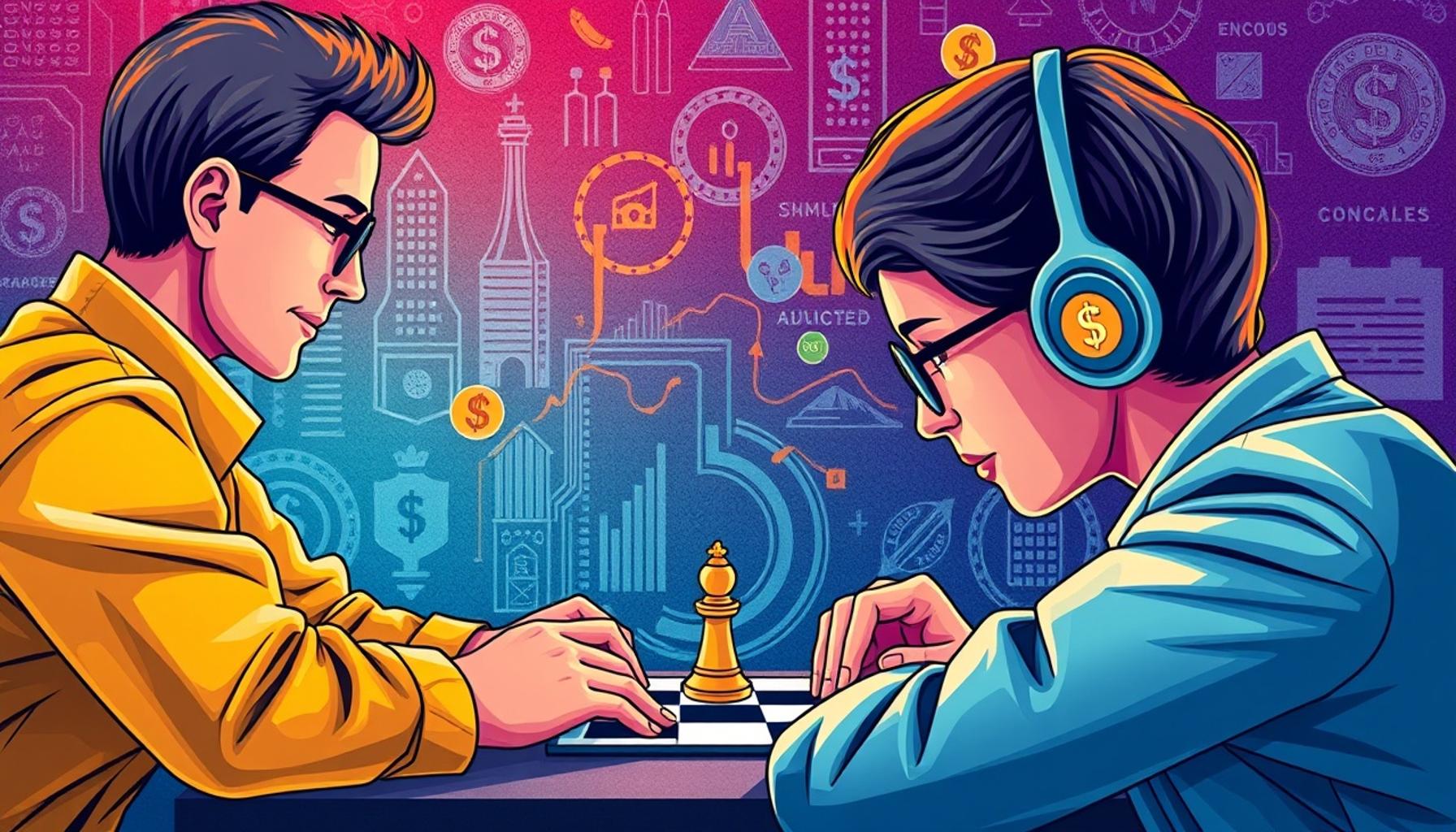
Cognitive Stimulation Through Puzzles: Improving Reasoning and Problem-Solving

Unlocking Potential Through Puzzles
In today’s fast-paced world, cognitive stimulation plays a crucial role in maintaining our mental agility. Engaging in activities like puzzles not only entertains but also sharpens our reasoning and problem-solving skills. This article explores how puzzles can serve as powerful tools for cognitive enhancement.
Puzzles come in various formats that challenge our minds and encourage critical thinking. Among these, some of the most popular types include:
- Crossword puzzles: These brain teasers are excellent for improving vocabulary as well as memory, as they require a firm grasp of language and knowledge across various subjects.
- Sudoku: This number puzzle enhances logical reasoning and number skills. Players must strategically fill in a grid without repeating numbers, fostering a keen sense of organization and analytical thinking.
- Jigsaw puzzles: These assist in boosting spatial awareness and visual perception. Assembling a jigsaw demands patience and a keen eye for detail, enhancing one’s ability to recognize patterns.
- Brain teasers: Often phrased as riddles or puzzles, these encourage lateral thinking and creativity. For instance, determining how a person can cross a river with a wolf, a goat, and a cabbage without losing them teaches strategic planning and foresight.
Engaging in these activities regularly is not merely a pastime; studies reveal that such activities have profound impacts on our cognitive abilities. Research indicates that regular engagement with puzzles can lead to:
- Improved memory retention: Working through puzzles challenges the brain, encouraging it to forge new pathways related to memory.
- Enhanced decision-making skills: The strategic elements of many puzzles train the brain to weigh options and make decisions under pressure.
- Greater mental flexibility: Solving diverse puzzles leads to a more adaptable mind, ready to navigate the complexities of daily life.
For Nigerians, incorporating traditional games like drafts and ayo into puzzle-solving activities can further enrich cognitive experiences. Both games invoke strategic thinking and require foresight, providing cultural relevance alongside cognitive benefits. Playing ayo, for instance, not only sharpens counting skills but also deepens understanding of strategy through the game dynamics and potential moves, embodying an essential aspect of Nigerian heritage.
The fascinating world of puzzles offers unique opportunities to sharpen your mind while enjoying the camaraderie of family and friends. Whether you’re solving a challenging crossword over a cup of tea or engaging in a spirited game of drafts, the cognitive benefits are boundless. With just a little effort, you can embark on this engaging journey to unlock your true intellectual potential!
RECOMMENDED: Check out this similar article
Types of Puzzles and Their Cognitive Benefits
Puzzles are more than just a source of entertainment; they are a gateway to enhanced cognitive function. Engaging with different types of puzzles can stimulate various areas of the brain, leading to improved reasoning and problem-solving capabilities. Understanding how each puzzle type contributes to cognitive development is essential for harnessing their full potential.
Crossword Puzzles
Starting with crossword puzzles, these word games challenge not only your vocabulary but also memory recall. Each clue hints at a word that must fit into a specific space, requiring connections across various subjects. This encourages players to engage in critical thinking as they compile their knowledge and even explore new terms. Regularly solving crosswords can lead to significant improvements in both language skills and short-term memory.
Sudoku
Next, we turn to Sudoku, a number puzzle that enhances logical reasoning and organizational skills. The objective is to fill a 9×9 grid with numbers so that each column, row, and 3×3 section contains all digits from 1 to 9 without repetition. This seemingly simple task requires strategic planning and foresight, making it a powerful tool for cultivating analytical thinking. Research has shown that individuals who routinely engage with Sudoku often demonstrate enhanced problem-solving techniques in real-life situations.
Jigsaw Puzzles
Jigsaw puzzles offer another dimension of cognitive stimulation. Assembling these puzzles requires a mix of visual perception and spatial awareness. Players must actively visualize how individual pieces interconnect to create a complete picture. This task not only develops pattern recognition but also enhances focus and patience. Studies indicate that individuals who frequently work on jigsaw puzzles are better equipped at recognizing the interrelatedness of concepts, a skill vital in many professional settings.
Brain Teasers
Lastly, engaging with brain teasers, such as riddles, adds an element of creative thinking to cognitive exercises. These challenges often require lateral thinking—approaching problems from unconventional angles to arrive at solutions. For example, a classic brain teaser asks how one can transport a wolf, goat, and cabbage across a river without losing any of them. Such puzzles encourage strategic planning and foresight, enhancing one’s ability to devise solutions in complex situations.
Incorporating these various puzzles into your routine can create a balanced cognitive workout, offering a comprehensive array of mental stimulation. The cumulative cognitive gains extend beyond just puzzle-solving; they prepare the mind to tackle daily challenges more adeptly. Additionally, as we integrate traditional Nigerian games like drafts and ayo, the cultural relevance enriches the experience further, forging a deeper connection with cognitive skills while celebrating heritage.
Cognitive Stimulation Through Puzzles: Improving Reasoning and Problem-Solving
Puzzles are more than mere entertainment; they serve as valuable tools for cognitive stimulation. Engaging with puzzles can significantly enhance various mental functions, including reasoning, critical thinking, and problem-solving abilities. They challenge individuals to think outside the box, requiring creative and analytical skills to unravel complex scenarios. One of the fascinating aspects of puzzles is their ability to improve neuroplasticity. As individuals solve puzzles, they form new neural connections, making their brains more adaptable. This adaptability is especially crucial in aging populations, where cognitive decline can be mitigated through activities that stimulate nerve cell activity. Studies suggest that regular engagement with puzzles can lead to measurable improvements in memory retention and mental agility.Moreover, puzzles cater to a variety of cognitive skills. For instance, logic puzzles encourage deductive reasoning, while crosswords and sudoku enhance vocabulary and numerical skills. These engaging activities not only sharpen mental faculties but also foster social interaction when completed in groups or families. As puzzle enthusiasts collaborate to solve challenges, they strengthen both cognitive abilities and social bonds, creating a wholesome environment for growth and improvement. It’s clear that a robust routine involving cognitive stimulation through puzzles can help individuals not only enhance their mental performance but also maintain their overall cognitive health. Integrating puzzles into daily life is a compelling way to promote cognitive longevity and well-being.
| Category | Benefits |
|---|---|
| Enhanced Reasoning Skills | Puzzles promote logical thinking and deduction, honing an individual’s reasoning capabilities. |
| Problem-Solving Improvement | By confronting challenges in puzzles, players develop better strategies for solving real-life issues. |
Incorporating puzzles into your routine offers an array of brain-boosting benefits, ensuring a stimulating experience that enhances cognitive function over time. Embrace the challenge and discover the myriad benefits waiting to be unlocked through playful inquisitiveness!
SEE ALSO: Click here to read another article
The Psychological and Educational Impacts of Puzzle Engagement
Engaging with puzzles not only sharpens cognitive skills but also layers psychological and educational advantages that can be transformative for individuals, particularly in a culturally rich environment like Nigeria. The impact of cognitive stimulation through puzzles extends beyond mere problem-solving; it fosters essential life skills that can lead to personal and professional growth.
Cognitive Flexibility
One of the standout benefits of puzzle-solving is the development of cognitive flexibility, which refers to the brain’s ability to switch between thinking about different concepts or to think about multiple concepts simultaneously. For example, riddles that require players to approach problems from various angles promote this flexibility. By regularly engaging with such logical challenges, individuals learn to adapt their thought processes, an ability that is paramount in today’s fast-paced, ever-changing world.
Research shows that participants in cognitive training programs incorporating puzzles exhibit heightened cognitive flexibility. This is particularly relevant in Nigeria, where diverse cultural contexts and daily challenges necessitate a quick adaptability in problem-solving approaches, whether in business negotiations or community conflict resolutions.
Memory Enhancement
Puzzles also contribute significantly to memory enhancement. Engaging in activities like crosswords and Sudoku primes the brain to retain and recall information more effectively. Studies have indicated that people who regularly engage in memory-intense puzzle-solving exhibit enhanced recall abilities that can translate into other areas of their lives, such as academic performance and professional skills. For Nigerian students, frequent practice with these types of puzzles can not only improve grades but also prepare them for competitive examinations that require strong analytical and critical thinking skills.
Community Connectivity through Traditional Games
The role of puzzles extends into the community, where traditional games play a crucial part in fostering social interactions and connections. Games like doubles in drafts or ayo are cherished not only for entertainment but also for the strategic thinking they demand. These games involve a level of cognitive engagement that reflects societal values and showcases indigenous knowledge systems. Playing these games enhances both reasoning and teamwork skills, as players must effectively navigate their own strategies while anticipating their opponent’s moves.
- Social Skills: Participating in group puzzle-solving activities encourages communication and collaborative thinking.
- Cultural Identity: Traditional games can serve as a bridge to cultural heritage, underscoring the importance of preserving indigenous knowledge.
Therapeutic Benefits
Importantly, puzzles serve therapeutic purposes by providing mental stimulation that can help combat stress and anxiety. Engaging in a challenging puzzle effectively distracts the mind from negative thoughts, promoting relaxation and focus. Particularly in urban centers across Nigeria, where life can escalate into stress, dedicating time to puzzles offers a much-needed cognitive retreat that positively affects mental health. The engagement with puzzles can also stimulate the release of dopamine, a neurotransmitter that enhances mood, promoting an overall sense of well-being.
In summary, integrating the diverse landscape of puzzles into daily life cultivates a robust cognitive framework that enhances not only reasoning and problem-solving but also enriches psychological and social dimensions in our communities. Engaging with puzzles is a simple yet profoundly impactful way to cultivate the mind while preserving cultural ties—an endeavor that resonates deeply in the vibrant tapestry of Nigerian society.
SEE ALSO: Click here to read another article
Conclusion
The exploration of cognitive stimulation through puzzles reveals not just an avenue for entertainment but a vital tool for enhancing essential skills in reasoning and problem-solving. As showcased in various aspects, the act of engaging with puzzles fosters cognitive flexibility, allowing individuals to adapt swiftly to new challenges, a necessity in a rapidly evolving world. Moreover, the enhancement of memory through consistent puzzle-solving practices empowers individuals, particularly students in Nigeria, to excel academically and attain professional success.
Beyond personal growth, the role of traditional games and community-driven puzzles serves to strengthen social ties, bridging generations and cultural gaps while promoting collaborative skills. In a nation as diverse as Nigeria, these cultural games become repositories of knowledge, embedding valuable lessons on strategy and teamwork. Therapeutic benefits further underscore the significance of puzzles, offering a mental escape that can alleviate stress and contribute to overall well-being.
In conclusion, as we navigate the complexities of modern life, integrating puzzles into our daily routines can yield transformative benefits. Embracing this engaging challenge not only cultivates sharper minds but also reinforces the importance of community and cultural heritage. The call to action is clear: It is time to unlock the profound potential of puzzles, harnessing their power to enrich our cognitive abilities and foster a thriving society.

Beatriz
Beatriz Johnson is a seasoned puzzle enthusiast and writer with a passion for unraveling the complexities of mind games and brain teasers. With over a decade of experience in the world of puzzles, she specializes in topics like logic games, riddles, and strategic challenges. Through her work, Beatriz empowers readers to sharpen their problem-solving skills, think creatively, and stay engaged in the ever-evolving landscape of mind games and puzzles.